
As design researchers, we often work at the intersection of central and local government, civil servants, the public, and ministers. Research here can be uncomfortable if it reveals gaps between good intent and reality. It challenges underlying assumptions, surfaces readiness issues, and can show that a proposed solution isn’t the best place to start.
The importance of gaining clarity and buy-in
Not long ago, I led some unusual but exciting Discovery research on an intersectional problem that started with a pre-defined, national solution. When writing up the findings of this work, the song “I can see clearly now, the rain has gone” popped up in my head. It continued: “I can see all obstacles in my way…”
In this example, the problem’s complexity, cutting across different policies, departments and organisations, meant that the research evidence didn’t support the predicted solution. At least, not yet. However, we did gain clarity and buy in for what needed to be done first. Much of this was obtained, not just because of our research findings, but through our shared interactions – uncovering the root problems and articulating and prioritising these together.
This was an important reminder that when research is seen as a supporting process, not just an output, it can help make things visible, unblock progress, and sequence it.
But how?
Working with constraints, not around them
Designing for public services means working with constraints. Policy cycles, funding, risk appetite and organisational incentives all shape what is possible. Ignoring these realities won’t make work more user or human-centred, it makes it harder to implement and sustain.
An effective approach is to treat this context as design material. For example, mapping political influence alongside user journeys, or understanding where decisions are made, and pacing change so organisations can understand and absorb it.
Good research can surface uncomfortable questions and evidence about how complex systems work. Handled carefully, this temporary discomfort becomes productive for the long-haul. With the right techniques, you can engage people across organisations, departments and teams without becoming defensive.
Examples of what has worked for me include directly involving stakeholders in research sessions and analysis, framing insights as system-level patterns, and using real people’s stories to reflect, rather than confront reality. The aim here is never to focus on failure and blame, but to create the conditions for better decisions.
This brings me to my next point, the importance of spaces to reach a shared understanding.
Using research as a convening force
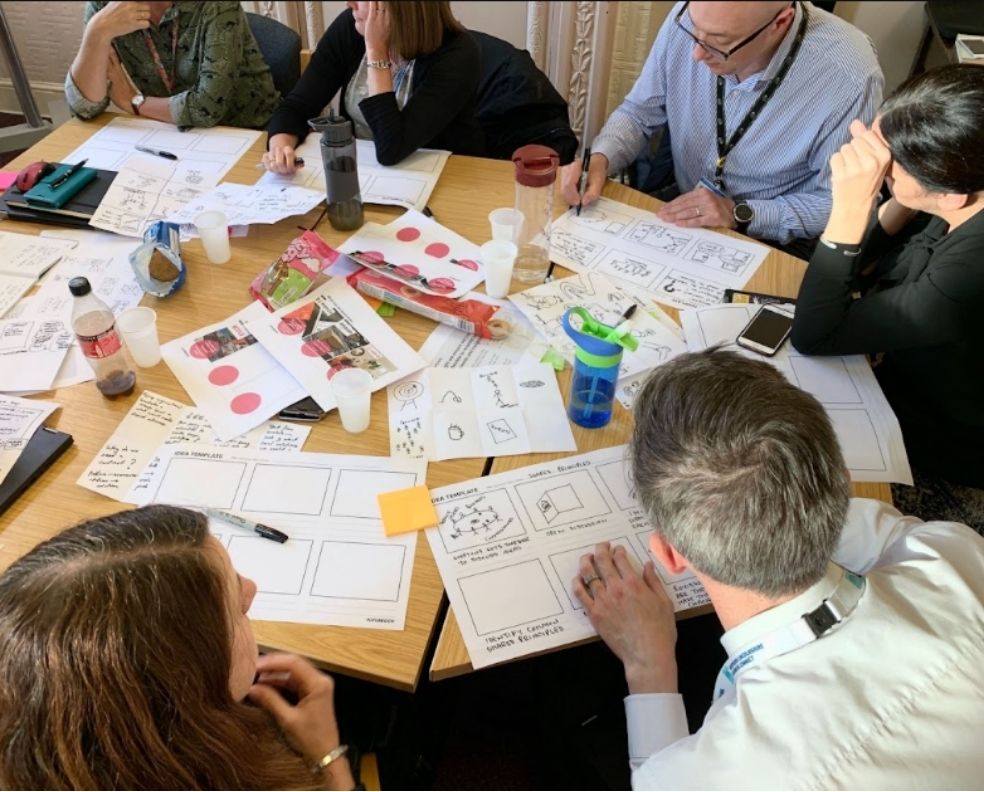
In any politically complex environment, research can help teams to see the same evidence at the same time, even if they interpret it differently. It can act as a neutral space for sense-making:
-
surfacing tensions without assigning blame
-
making trade-offs explicit
-
creating a shared language across policy, delivery, and technical teams
-
supporting more confident, evidence-based decision-making
Some of the most impactful moments I’ve experienced in projects have been those precious moments when stakeholders across roles, teams and organisations recognise that they’re responding to the same problem from different positions or points of view.
When we can see both constraints and opportunities clearly, we have the tools to unblock brilliant people with great ideas, passion and ambition about what they can do. This helps organisations move from: “We have brilliant people who are passionate and ambitious about what they can do, but we have all these problems restricting us,” to a different mindset: “Okay, we have some problems and constraints. But, we now understand why. We see the opportunities and we have brilliant people with skills and ambition – now what can we do?”.
Aligning around constraints and opportunities
Without reaching a shared understanding of the constraints and opportunities in politically complex systems, we can’t get on the same page and align on what to do next. Sometimes the most user-centred outcome of research isn’t clarity on how to shape a new product or platform, it’s a clear, shared purpose. This doesn’t mean complexity disappears. It means everyone involved has enough understanding of the constraints and opportunities, and are sufficiently aligned for change to happen. And that requires agreement on the problem to solve first.
I searched for the full song as I struggled to remember the rest of the lyrics and the next line goes like this: “Gone are all the clouds that had me blind…” A good representation of the power of research in this type of scenario.
More from our design blog
Transformation is for everyone. We love sharing our thoughts, approaches, learning and research all gained from the work we do.
-

How AI agents will change the role of your website
Read blog post -

Thinking in pictures with visual facilitation
Read blog post -
Building visualisations that adapt
Read blog post -

Taming the prototype monster
Read blog post
