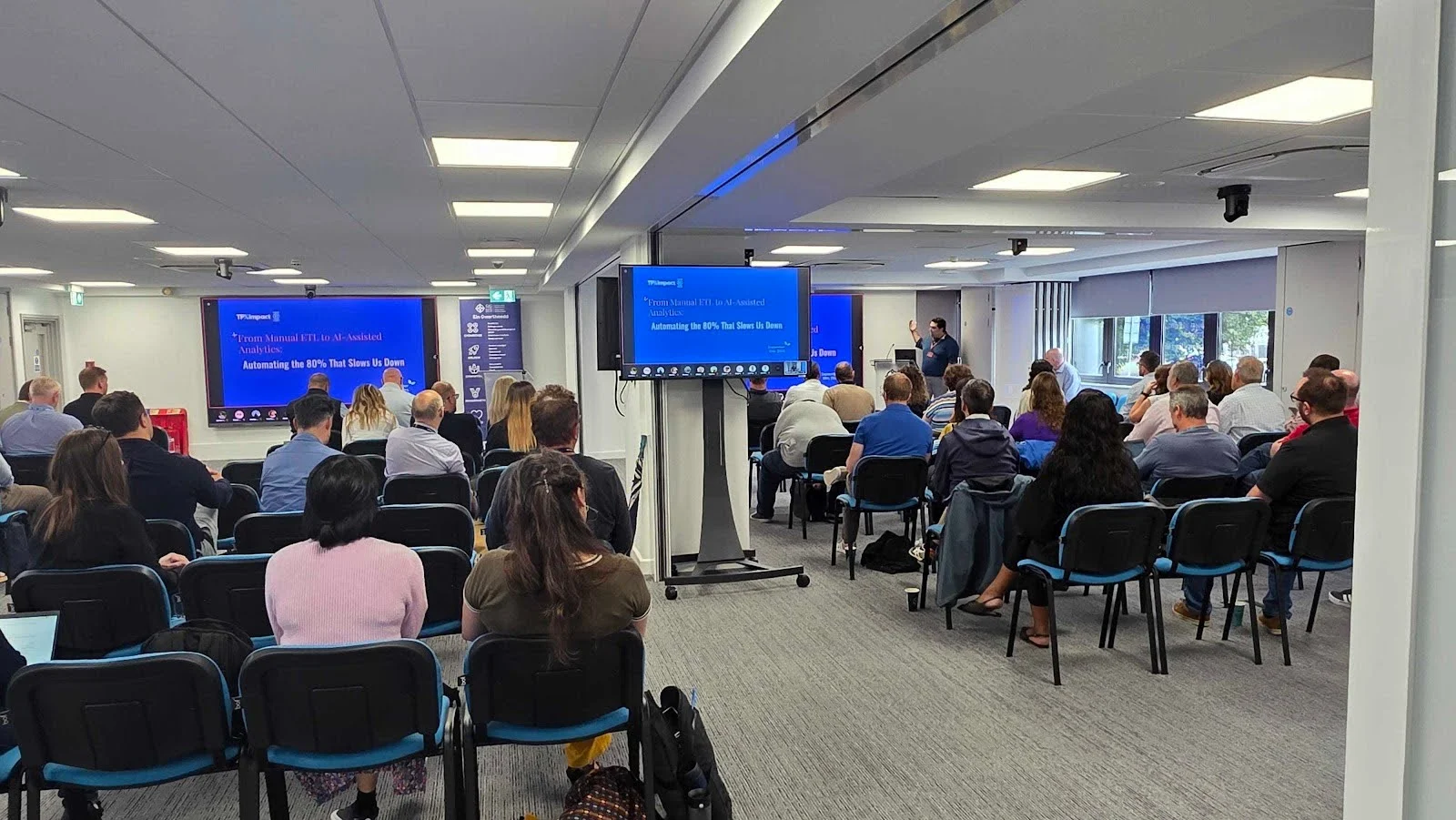
When we brought together Deputy Directors, Service Owners and digital leaders for a Chatham House roundtable on AI in government, the conversation kept circling back to the same quiet truth: the real challenges of AI show up after the excitement wears off.
Here’s the thing: pilots are going to get traction because they generate energy. But then that energy (and budget) gets spent on a demo, attention shifts elsewhere.
And then everyone has to get on with the job of running an actual service. One participant captured it neatly.
“We’ve accelerated the speed of making, not the speed of thinking.”
That became the unofficial theme of the session.
This piece is about that hype gap: The gap between “we built something interesting quickly” and thinking about “oh, but people now depend on this”.
The moment the work shifts
Several people described the exact moment in different ways. The point where the team looks up from the prototype and sees the rest of the organisation staring back.
One participant summarised it: “The structure you sit in changes how much governance you can challenge.”
Another added, “We haven’t mandated a specific tool. We’ve mandated adoption and created structured learning paths.”
There was a sense that the organisation's reality arrives early and doesn’t go away. When we’re talking about building for real life, people weren’t talking about models or metaprompts.
They were talking about the practicalities: who signs off what, who is accountable, who supports the thing, how staff actually use it, what the unions expect, and how governance interprets risk. The service becomes real the moment it intersects with all of this.
When governance becomes part of delivery
One theme that emerged strongly was the need to treat governance as something you design with, not something that happens to you. People were open about the difficulty.
Someone said, “It might be a mistake to apply the theory of digital to the practice of AI.”
Another explained how their team had to go deeper into risk and assurance earlier than planned, because the questions that came back weren’t predictable. The ease of adoption has brought the bleeding edge of tech closer to the government than ever before.
The interesting shift was that nobody in the room wanted to circumvent governance. They wanted governance that actually reflected the work they were doing. Shorter conversations that added incremental value.
Earlier engagement with smaller decisions made more often—no big “gate” moments where work is judged out of context.
Confidence matters more than technical skill
Another clear thread was capability, but not in the way people usually frame it. Leaders weren’t asking how to train hundreds of people on specific AI tools. They were asking how to help their staff feel comfortable using something that still feels unfamiliar. And it's not about AI skills, it's about the general skills that build learning teams.
“Digital literacy needs to be boosted so people can work well with these technologies.”
It wasn’t about turning staff into experts. It was about helping them feel able to use AI safely without worrying about getting things wrong.
Several departments had deliberately focused on confidence rather than tooling. Small experiments. Internal champions. Gentle expectations, not pressure. This seemed to work far better than any large training programme.
Building for the long haul
A lot of the roundtable was about what happens after the pilot stops being a novelty. The questions were practical: who owns it, who maintains it, how it gets monitored, and how you stop it from accumulating risk as it grows?
If you’re the first person scaling AI in your organisation, you don’t just have to ship your service; you need to guide your whole enterprise through what’s possible.
“How do you move from a small pilot to something enterprise-ready when there’s no support wrapper around it?”
It was a reminder that prototypes do not create lasting structures. Those have to be created by hand, but also, many of the existing structures in place can accommodate AI with only minor modification.
Teams that planned support early had fewer surprises. Those who didn’t often found themselves scrambling to retrofit decisions that should have been made months earlier.
The basics still matter
Another consistent pattern was the importance of the fundamentals: data quality, accessibility, information architecture, and user-centred design.
None of these things is cutting-edge anymore, but it's clear that, in many cases, they aren’t being done consistently enough for operational or service teams to rely on the outputs of an LLM that draws on a data or content store.
“We need to ask: are we getting the right data, and is it coming in the right way?”
Another pointed out that UCD teams play a crucial role.
“We need UCD people to interface with big suppliers and apply good practices to existing products.”
Sustainability isn’t going away
Towards the end of the roundtable, one team raised sustainability. They were honest:
“We don’t know how to compute the real numbers yet. Nobody does, and the big providers aren’t incentivised to release that information. We need quantified data.”
But even without complete information, they were starting to prepare. Several departments expect carbon reporting for AI services to become standard within a few years.
The pattern underneath it all
The leaders in the room were clear: progress doesn’t come from the pilot itself. It comes from everything that happens around it, lessons we’ve learned at least once before: Understand your organisational context. Work with governance early.
Build staff confidence. Invest in your support structures. Ask who the users are, and what they really need?
More from our tech blog
Transformation is for everyone. We love sharing our thoughts, approaches, learning and research all gained from the work we do.
-

-
-

Reimagining case management across secure government
Read blog post -