
We’ve been working with the Ministry of Justice (MOJ) to design new services to manage and support people on probation in the community.
Many people on probation live with mental health challenges, substance use issues or the impacts of trauma. Conducting research in this context demands a careful, trauma-informed approach - one that prioritises safety, trust and empowerment.
Through this work, we saw how taking part in research could be a positive experience in itself, offering people a chance to use their experiences to help improve services for others. In a context where people often feel defined by their past, contributing to something constructive and future-focused can be particularly empowering.
Em Sutcliffe and I drew on the six principles of trauma-informed practice, creating safe spaces for people to share their stories and views. In this post, I'll share some of the practices we used and how we adapted them – not only to ensure our approach was suitable for probation settings, but also to show how teams can adapt approaches appropriately for any research involving vulnerable groups or sensitive topics.
Planning and research recruitment
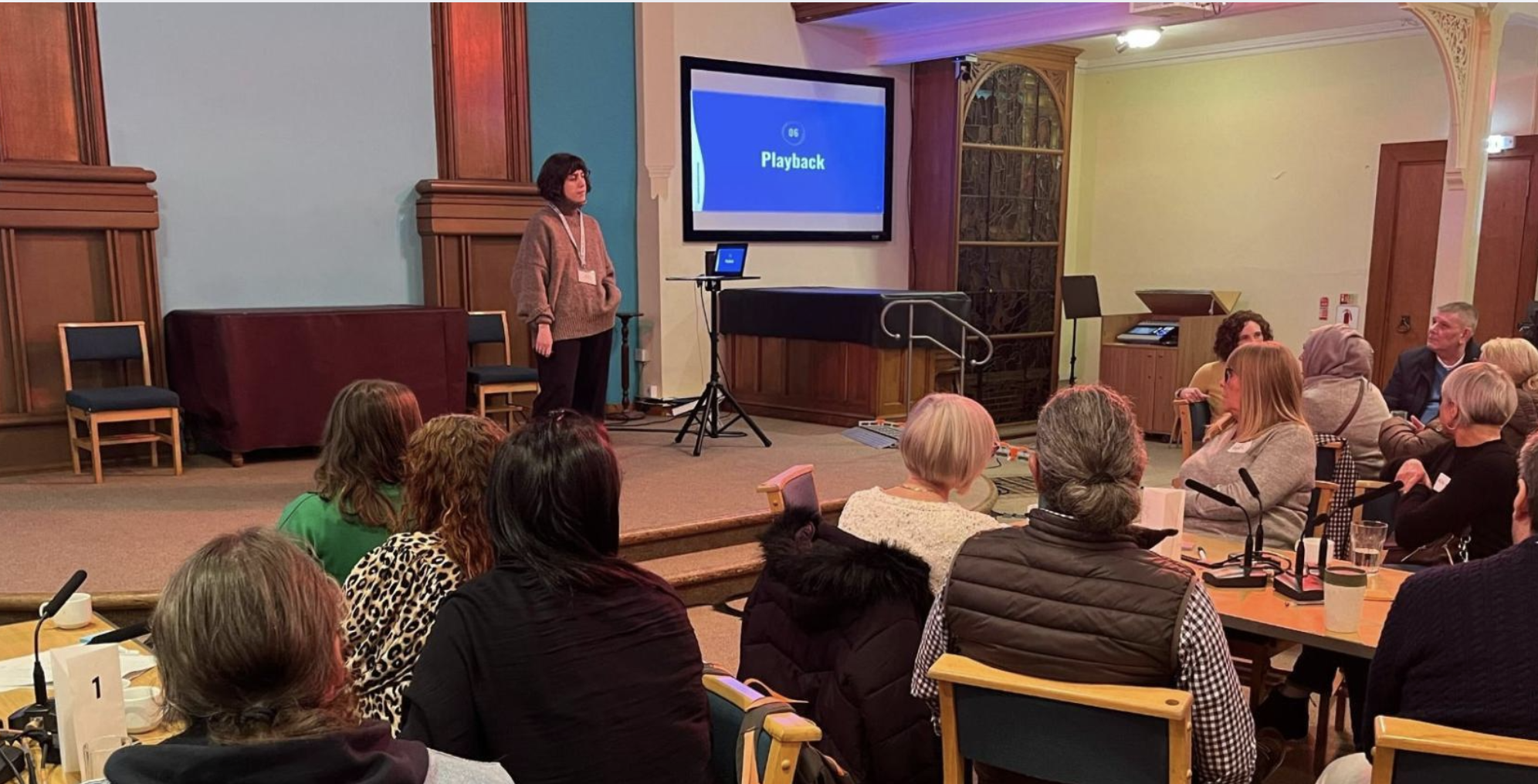
We partnered with the charity Revolving Doors, as well as MOJ lived experience forum leads, to recruit participants for research. They helped us to understand and respond to our participants’ needs ahead of time, sense-checked our research approaches and helped us gather fully informed consent to take part. The partners also attended our face-to-face sessions and workshops, so that there was a known, trusted person in the room to help participants feel comfortable enough to share openly and honestly.
Pre-research information packs are always good practice to set participants’ expectations ahead of a session, but we took particular care with them during this work. A significant number of people on probation have low literacy levels or additional access needs, so our packs needed to be written in Plain English, formatted for easy reading, and printable in case participants couldn’t access them in a digital format. We wanted to begin cultivating a safe space by being completely transparent about the aims of the research, how sessions would be conducted and how we’d use the information they shared with us. This allowed participants to give fully informed and voluntary consent to take part.
We were similarly intentional about the way we designed our research materials and questions. We kept materials simple and low fidelity - using things like short storyboard prompts, hand-drawn activity sheets or emoji reactions - to make research feel informal and easy to engage in. Our discussion guides were also written in Plain English, avoiding any potentially triggering language and being mindful not to ask for unnecessary details, such as information about the nature of offences.
Safeguarding of both participants and researchers was a top priority for us throughout. All contact between researchers and participants was handled through our partner coordinators to maintain privacy for all parties. And safeguarding leads in both project teams supported us to manage and respond to any risks. We also debriefed as a team after sessions to process emotional content and support the wellbeing of everyone who attended.
Empowering research participants
Ensuring participants feel empowered and in control is a key principle of trauma-informed research.
We let participants know at every stage that it was their choice whether they took part in our research. We reminded people of their right to choose not to answer a question, stop the session or withdraw from the research at any point. We also emphasised anonymity and prioritised transparency - allowing participants to see our handwritten notes and change or remove things to ensure they felt in control of what they’d shared.
Something we tried to be hyper-aware of throughout this work was our positionality as researchers in this space - our backgrounds, values and potential biases. At the start of the work, we conducted desk research and spoke to experts to better understand our participants’ needs and challenges. We also worked to minimise any perceived power imbalances during research sessions. This included being intentional about the way we dressed and the way we spoke, keeping things informal and conversational to build rapport and trust and enable open dialogue.
We reviewed our standard research practices to ensure they were appropriate for this context. While we’d typically record research sessions to ensure all feedback is captured and support note-taking, in these sessions, we prioritised participant comfort and anonymity. We were conscious that people on probation may not feel safe to share if they were being recorded, particularly with government researchers. We therefore designed our workshop activities to allow participants to capture their views and feedback as they went, and had team members live notetaking during sessions.
Facilitating with care
We conducted research face-to-face where possible, giving participants space to settle in and chat to us about non-research topics, building trust and rapport from the outset. We were intentional in how we facilitated conversations - practising active listening, giving people space to share other views that were important to them, and reflecting what we heard to check our understanding. When people chose to share difficult memories or experiences, we thanked them for their openness, acknowledged their experience, and made sure they were ok and comfortable to continue.
After research, we wanted to keep participants in the loop with how their insights and feedback were directly impacting our service design decisions. We shared short ‘you said, we did’ packs that summarised what we’d heard and the changes we were making to services as a result. This allowed us to be transparent about how we were using information, and to double-check that we hadn’t missed or misrepresented anything in our findings. It also helped us ensure people felt that their time and feedback was valued.
We asked participants for feedback, either as part of face-to-face workshops, or after sessions via our partners, to understand how they’d experienced taking part in research with us. For example, we heard after an online focus group that participants would have liked more time for certain activities, which we built into plans for future sessions.
Taking care in every conversation
Sometimes we know that we’re conducting research with a vulnerable group or around a sensitive topic. But in any service, people can be affected by trauma, mental health or substance use issues, and we won’t always be aware. That’s why it’s useful to build practices like these into any research.
This work reminded me that good research isn’t just about the insights we gather, it’s about how we listen. When people share their stories and opinions, especially in contexts where trust can be fragile, it’s an act of courage. That generosity deserves research spaces built on respect and dignity.
We want to give a huge thank you to our colleagues at MOJ and Revolving Doors who facilitated and supported this work.
More from our design blog
Transformation is for everyone. We love sharing our thoughts, approaches, learning and research all gained from the work we do.
-
-

What good design documentation looks like
Read blog post -
Naming services in complex situations
Read blog post -

Using inclusive research approaches with Blood Cancer UK
Read blog post
